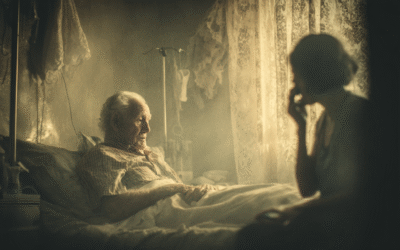
“I don’t feel like we are seen at all.”
That line comes from a carer, someone trying to help a loved one navigate Australia’s mental health system. It sits quietly in the Productivity Commission’s recent review of the National Mental Health and Suicide Prevention Agreement, but it hits like a stone in the gut. Not because it’s rare. Because it’s common.
The review is damning in its detail, but its deeper truth is quieter, more devastating: the people who know the system best, those who’ve lived through it, are still shouting into the void. Consumers. Carers. People who’ve survived suicide attempts. They were promised a seat at the table. What they got was a seat in the audience.
Australia’s mental health policy has mastered the language of inclusion. “Lived experience” appears in every strategy document now. But language isn’t enough. And consultation is not the same as power.
So here’s the question that matters most as governments scramble to rewrite the next agreement:
What happens when nobody’s really listening?
The Promise of Lived Experience
A few years ago, it started to feel like something might actually change.
“Lived experience” became the gold standard in mental health reform rhetoric. It was no longer enough for bureaucrats and clinicians to set policy in isolation, there was growing recognition that people who had been there knew things the system didn’t. Their insights weren’t just helpful, they were essential.
The National Mental Health and Suicide Prevention Agreement, signed in 2022, seemed to embrace that. It acknowledged the need to embed lived and living experience into every layer of the system. Co-design wasn’t presented as an afterthought; it was supposed to be central. The Agreement promised that people who had lived through mental ill-health, suicidal distress, or the long tail of caregiving would finally be listened to, not just as stories, but as stakeholders.
This mirrored broader global momentum. In Aotearoa New Zealand, peer support has long been woven into public mental health services. In the UK, lived experience leadership is a formal part of some NHS Trusts’ structures. Canada’s Mental Health Commission has embedded lived experience into its governance. These aren’t just gestures, they’re shifts in who gets to shape the system.
Australia, on paper, was following suit.
But there’s a catch. It’s easier to say “we value your voice” than it is to give up control. And if the only place people with lived experience are truly included is in the language of reform, not the design, governance, or implementation, then we’re not co-designing anything. We’re just rebranding business as usual.
The gap between intention and impact isn’t a small crack, it’s a structural fault line. And according to the Commission’s review, that fault line is growing wider.
Tokenism Over Transformation
The Productivity Commission didn’t mince words. The current agreement, it concluded, was “not fit for purpose.” And nowhere is that more evident than in how it handled the voices it claimed to center.
People with lived experience weren’t just underutilized, they were barely included in any meaningful way. The agreement made sweeping promises about embedding their voices, but the review reveals how shallow that inclusion often was: last-minute consultation, limited roles in governance, no real influence over funding decisions, timelines too tight to allow for trust-building. In some cases, those invited to contribute weren’t even told what happened to their input. It vanished into process.
Roses in the Ocean, a national lived experience organization, was blunt in its submission:
“Very short time frames make important aspects of service development such as co-design and evaluation unviable… [this] risks reducing these commitments to tokenism.”
The word tokenism shows up repeatedly in the review. And for good reason. Too often, governments invite a few lived experience representatives into a room, ask for their views, and then proceed exactly as planned. It’s not inclusion, it’s optics.
This isn’t just frustrating. It’s a form of epistemic injustice, a failure to treat someone as a credible knower because of who they are. When people share hard-won wisdom about what does and doesn’t work, and the system responds with polite silence or bureaucratic dilution, the damage is twofold: first, reform stalls. And second, trust erodes.
Consumers who spoke to the Commission described feeling disrespected, dismissed, re-traumatized. Carers said they were excluded from critical care decisions despite being responsible for 24/7 support at home. Peer workers spoke of being hired into token roles without clear scope, support, or authority. In some places, clinicians wouldn’t even acknowledge their expertise.
One submission described how people were “consulted,” then watched their words disappear into the background noise of institutional inertia. Others talked about the emotional toll of being asked to relive traumatic experiences for the sake of a report, only to see no change at all.
These aren’t failures of etiquette. They’re failures of governance, design, and, at root, courage. Because true co-design means giving up control, sharing decision-making power, and accepting that the people closest to the problem often know things the system can’t see from above.
Until that happens, “lived experience” risks becoming just another line item, something to reference in strategies, but not felt in the outcomes.
What Genuine Engagement Looks Like
If tokenism is the trap, co-design is the way out, but only if we’re honest about what it really entails.
Co-design isn’t a workshop with sticky notes. It’s not a last-minute round of consultation. It’s a process of shared ownership, where people with lived and living experience aren’t just speaking into a system, they’re building it alongside others, with the same authority, the same pay, the same stakes.
The Productivity Commission’s review doesn’t just name what went wrong, it offers a blueprint for doing it better. It calls for a “transparent, well-resourced process of co-design” that centers the needs, priorities, and knowledge of consumers, carers, peer workers, and communities.
What would that look like in practice?
- Time: Real co-design doesn’t fit into election cycles or hurried budget timelines. It needs months, not weeks, to build trust, consult meaningfully, and test ideas before they’re rolled out.
- Resourcing: Lived experience isn’t a volunteer gig. People must be paid equitably for their time, energy, and insight. That includes travel, prep, debriefing, and emotional labor.
- Decision-making power: Consultation is asking for opinions. Co-design is sharing control. That means lived experience voices should be embedded in governance, not parked on the margins.
- Structural support: Peak bodies representing lived experience must be funded to lead, not just invited to react. They need the infrastructure, data access, and authority to shape policy alongside government.
We’ve seen glimpses of what’s possible. The peer workforce, for instance, has shown enormous value, not just in service delivery, but in shifting the culture of care. When people feel seen, heard, and supported by someone who’s walked a similar path, it changes the texture of help. It builds trust where there was suspicion. Connection where there was fear.
But peer workers can’t be expected to fix broken systems from the inside while being underpaid, isolated, or tokenized. As the review suggests, a nationally consistent scope of practice, clear career pathways, and clinician education are vital if peer support is to thrive, not just survive.
The same goes for First Nations-led models of care. Community-controlled health organizations already know how to deliver culturally safe, holistic support. But without specific schedules, dedicated funding, and decision-making authority, their wisdom gets lost in a one-size-fits-none system.
Ultimately, co-design isn’t just about making better policy. It’s about repairing trust. About replacing the silence of tokenism with the dialogue of collaboration. And about acknowledging that people who have lived through the hardest parts of the system often carry the clearest vision of how it needs to change.
A System Can’t Be Person-Centred Without the Person
It’s easy to write “person-centred” into a mission statement. Harder to make it real. Because person-centred care isn’t just about service design or warm language in clinical settings. It’s about power, who holds it, who shares it, and who is willing to let it go.
What the Productivity Commission’s interim review makes clear is this: despite the talk, we’re still building systems about people, not with them. And when those people are sidelined, again, the result isn’t just ineffective policy. It’s disillusionment. Fatigue. Grief. For some, it’s the difference between staying engaged and giving up.
Reform doesn’t fail because we lack reports or roadmaps. It fails when we refuse to listen, really listen, to those who have lived through the system’s failures. It fails when governments say “we value your experience” but then make decisions in rooms you’re not invited into.
The next mental health agreement, if it’s to mean anything, must start with this reckoning. That co-design isn’t a feel-good feature, it’s the foundation. That lived experience isn’t supplementary, it’s central. And that trust, once broken, can’t be restored with more consultation papers.
People aren’t waiting for a perfect system. They’re waiting for a human one.
One that knows support isn’t a program, it’s a relationship. That services can’t be trauma-informed if the process of seeking help is itself re-traumatizing. That healing is possible, but not in a system where your voice is treated as decoration instead of direction.
There’s still time to rewrite the next chapter. But it will take more than reform. It will take humility. And a willingness, finally, to not just include the person, but follow their lead.