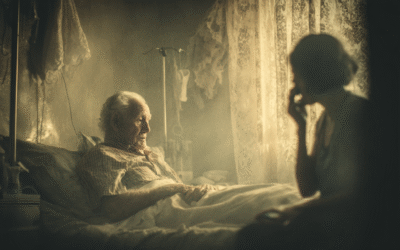
They don’t make the front pages. They rarely end up in glossy mental health campaigns or government roundtables. But right now, an estimated half a million Australians are living with serious mental illness, and receiving no structured support. Not because they don’t need it. But because they don’t fit the system we built.
They’re the people who fall between the cracks left by the NDIS. And their absence from care is not accidental. It’s systemic.
A System Designed to Exclude
When the National Disability Insurance Scheme (NDIS) launched, it carried the promise of transformational support for Australians with disabilities, including those with psychosocial disability, the term used for the functional impacts of enduring mental illness.
But as the Productivity Commission’s 2025 interim review makes painfully clear, that promise came with trade-offs: the introduction of the NDIS led to the withdrawal of funding for many pre-existing psychosocial support services. The logic was simple, NDIS would fill the gap. The reality? It didn’t.
And it still doesn’t.
Because access to the NDIS isn’t designed for the way mental illness actually works. It’s episodic. It fluctuates. It doesn’t always come with a paper trail of psychiatric assessments, or the kind of permanent functional impairment needed to meet eligibility. For many people, especially those in rural areas, culturally diverse communities, or emerging crisis, it’s just too hard to navigate the paperwork, the evidence requirements, or the time.
So what happens to the ones who don’t qualify?
They vanish.
What Are Psychosocial Supports, and Why Do They Matter?
Psychosocial support is the kind of care that doesn’t fit neatly into traditional medical models but makes all the difference in daily life. It includes help finding housing, managing finances, building social connections, accessing transport, or learning how to re-enter the workforce. It’s the scaffold that allows people to live, not just survive.
These supports can prevent hospitalisations. They reduce suicide risk. They make recovery sustainable.
And they’re in critically short supply.
In 2022–23, the gap in service coverage left an estimated 230,500 people with severe mental illness and 263,100 people with moderate illness without structured psychosocial support. These aren’t marginal cases, they’re people whose needs are recognised but unmet.
This isn’t just an oversight. It’s a policy failure. And it’s one we’ve known about for years.
The Quiet Crisis Behind Every Emergency Room Visit
Without access to psychosocial supports, people with serious mental illness end up in the only parts of the system that can’t turn them away: emergency departments, police custody, homelessness services.
It’s here that the system shows its worst face: reactive, dehumanising, and expensive.
GPs, often the only consistent contact point, are left managing escalating mental health crises with no referral pathways, no housing connections, no funded programs to link into. Carers, already stretched thin, carry the burden of case management without training or resources. Peer workers and community organisations attempt to plug holes, but with little funding and no sustainable infrastructure.
People disappear into these gaps, not metaphorically, but literally. Disconnected from services. Unseen in data. Absent from recovery models.
What the Commission Says Must Change
The Productivity Commission didn’t mince words. It called the current state of psychosocial support provision outside the NDIS a “significant service gap.” And it urged all levels of government to treat this not as an optional upgrade, but a structural priority.
Here’s what the Commission is proposing:
- Define roles and responsibilities: The Australian, state and territory governments need to agree, who funds what, and for whom?
- Immediately begin commissioning services: Especially in areas with the greatest unmet need, governments should not wait until a new national agreement is finalised.
- Resource PHNs to deliver care: Primary Health Networks have existing relationships and commissioning experience; they’re well-placed to coordinate psychosocial support locally.
- Set a national target to address the gap by 2030: With a clear plan, funding stream, and accountability measures.
But these recommendations will only matter if they’re taken seriously. And historically, people outside the NDIS have not been a political priority.
No One Should Have to Earn Their Right to Care
We don’t ask people with cancer to prove they’re sick enough to deserve chemotherapy. We don’t require people with spinal injuries to reapply for their wheelchair every six months.
But in the mental health system, this kind of vigilance, of doubt, is built in. And it tells people, implicitly or explicitly: you’re on your own unless you meet our criteria.
What would it mean to start from a different premise?
That psychosocial disability is real, even if it fluctuates.
That support is a right, not a reward for persistence.
That systems should meet people where they are, not where paperwork says they ought to be.
A Future With Room for Everyone
The people left out of the NDIS are not invisible. They’re just politically inconvenient. Many are precariously housed, underemployed, or juggling multiple intersecting challenges, trauma, addiction, chronic illness, financial instability. They don’t fit into our neat service categories, so we pretend they don’t exist.
But they do.
And if the next national mental health agreement is to be worth anything, it must be built not around ideal models of care, but around the realities of those who’ve been excluded the longest. That starts with psychosocial support. It starts with infrastructure, not platitudes. And it starts now.
Because a system that forgets half a million people isn’t broken, it’s designed that way.
And it’s time we redesigned it.