When death is certain, the question isn’t whether someone will die, but how. In regional Victoria, that answer depends less on medicine than on minutes – and those minutes are shaped by local government.
TL;DR
Four in five deaths in Australia are expected — the slow end of chronic illness rather than sudden loss — yet fewer than one in five people receive specialist palliative care.
In Wellington Shire, that translates to about 500 deaths a year and 300–400 people who could benefit from palliative support.
Yarram and Maffra both provide compassionate care with limited means, but distance, equipment shortages, and stretched GPs turn dying into a race against time.
This piece argues that local councils can change that.
By treating time as infrastructure — managing logistics, access, and inclusion – they can make dying in place humane, not heroic.
Because ageing in place only matters if dying in place is possible.
When the clock measures pain, not life
In Australia, dying is rarely sudden. Research suggests around 80 percent of all deaths are “expected” – the result of illnesses that unfold over weeks, months, or years. Roughly 60 percent of those people would qualify for, and benefit from, some form of palliative care, whether through a specialist team or community nursing. Yet only a fraction actually receive it. Nationally, just one in five Australians who might need palliative support ever enter a formal program, and access drops even further outside the cities.
That gap is measured not in percentages but in time. In palliative care, the difference between relief and suffering is counted in minutes – the time it takes for medication to arrive, a nurse to reach the gate, or a doctor to answer the phone.
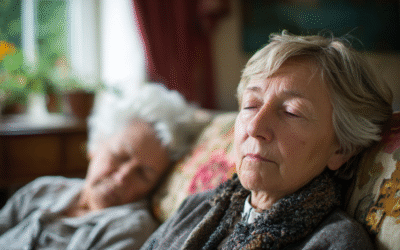
Across Gippsland and much of regional Victoria, those minutes stretch long. A nurse in Yarram may call for a prescriber in Sale and wait an hour or more. Families sit by the bed, listening to every breath, wondering if help will come in time.
This is not a failure of compassion. It’s what happens when geography dictates how people die. And that is something local government – quietly but powerfully – can change.
The Geography of Dying
Each year about 39,000 people die in Victoria, and only 8,000 to 9,000 of those deaths fall under specialist palliative-care programs. The rest – roughly four out of five – pass away without formal palliative support, despite many living with illnesses that unfold predictably and painfully over time.
Scaled to Wellington Shire, that national pattern translates to around 500 deaths a year and a likely need for 300 to 400 palliative-care cases annually. In Yarram alone, that’s roughly 60 to 70 people each year who could benefit from structured, medically supported palliation.
Yarram is fortunate by rural standards: it has a hospital with a designated palliative suite, backed by dedicated community nurses and volunteers. But even with those assets, the service meets only a fraction of real demand. The hospital, like Maffra’s, has had to rely heavily on community fundraising to equip and maintain its palliative rooms. Neither facility can sustain 24-hour on-site GPs, and both depend on telehealth doctors after hours – a system that falters in the most human moments of care. For palliative patients at home, it’s worse: GPs rarely have time for home visits, leaving families to cope with remote advice and the limited reach of community nurses doing their utmost.
When symptoms flare, an ambulance becomes the default option. From Yarram to Sale or Traralgon is a 45- to 60-minute drive – longer if crews are stretched. Add waiting times for dispatch and emergency triage, and the gap between pain and relief can stretch from ninety minutes to as long as four or five hours.
For someone already fragile, that delay isn’t just uncomfortable – it’s life-shortening. The body exhausts itself against unrelieved pain; the spirit gives out sooner. And what remains of life, meant to be measured in quiet days of peace, becomes a battle against time itself.
The Limits of Heroism
Rural nurses already do the impossible – driving through the night on unlit roads, managing pain crises by phone, and sitting with families when the doctor is hours away. Their skill, endurance, and empathy hold the system together. But goodwill isn’t enough when the system relies on heroics to function.
Recent reforms allowing nurse practitioners and endorsed registered nurses to prescribe palliative medications will eventually make a difference. Yet in practice, the benefits will take time to reach places like Yarram. Nurses must first upskill and obtain certification, a process that costs both time and money. Once qualified, they’ll become highly sought-after commodities – the kind of clinicians every rural service will compete to attract and keep. Convincing nurses to undertake the training, securing GPs willing to supervise them, and then retaining them once certified will all be uphill battles. Without structural investment, the reform risks widening the gap between metro and regional care rather than closing it.
Meanwhile, the equipment shortages remain critical. By the time someone is formally declared palliative, they may have only weeks – sometimes days – left. That’s too late to wait for an adjustable bed, pressure mattress, or lifting hoist to be ordered and shipped. There needs to be local access to essential equipment ready to deploy at a moment’s notice.
Yet local health services can’t afford to buy, store, maintain, and insure this stock. Even when they manage to fundraise for a few beds, servicing and compliance costs eat into clinical budgets, and liability concerns sit uncomfortably on small organisations.
For patients who choose to remain at home, these delays cascade. Many are bedridden or have limited mobility, requiring two carers for personal support. That draws from an already stretched aged-care workforce and places further pressure on Home Care Packages, which were never designed to respond overnight. Although the new aged-care reforms make it easier to apply for emergency upgrades to care packages, the process still takes time – and in palliative care, time is exactly what people no longer have.
Every gap – a missing bed, an unfilled shift, a certification still in process – becomes another minute of suffering that could have been prevented with planning rather than improvisation.
Why Local Government Belongs in the Room
When people think about palliative care, they think about doctors, nurses, and hospitals – not councils. Yet every hour lost in rural end-of-life care can usually be traced back to something that sits squarely within local government’s reach: roads, signage, lighting, zoning, housing, transport, waste, planning, and community coordination.
Councils can’t prescribe morphine or run a hospice, but they already decide how fast morphine can arrive. They approve the roads ambulances drive on, the addresses responders can read at night, the footpaths carers push beds along, and the grants that keep community nurses mobile. They control the storage depots that could hold equipment, the public facilities that could host grief groups, and the data that shows where time is lost.
In Wellington, the Live Well in Wellington 2025-29 plan names the council as Lead, Partner, Funder, and Advocate. Those same roles translate directly into palliative care:
- Lead, by coordinating logistics and local partnerships;
- Partner, by embedding with the regional health services already providing bedside care;
- Funder, by investing in infrastructure that shortens the minutes between need and response; and
- Advocate, by turning that local evidence into state and federal reform.
What local government brings is not medicine but mechanics – the power to design out delay. If councils start treating time as infrastructure, they can transform palliative care more effectively than any single clinical reform.
That is the bridge to the next question: what, exactly, can a council do?
A Pragmatic Roadmap for Councils
If time is the missing resource in rural palliative care, councils are the engineers who can shorten it. Most solutions don’t require new hospitals – only the smarter use of what local government already controls.
1 | Map time, not just services
Start with an honest baseline. Commission a Palliative Access Audit that overlays population, hospitals, aged-care homes, ambulance routes, and real travel times. Identify which communities are more than 30 or 45 minutes from a hospital with 24-hour palliative capacity, and publish those results. When the delay is visible on a map, it becomes a design problem, not an abstract inequity.
2 | Co-locate Palliative Navigators within health services
Navigators should sit inside or next door to local hospitals – Sale, Maffra, and Yarram – not in libraries or council offices. Under a memorandum of understanding, council funds the non-clinical support (admin hours, print guides, fuel vouchers, technology) while the health service retains clinical governance. Families get one human contact who can help them register for home care, access equipment, and coordinate visits – before a crisis, not after.
3 | Create a Regional Palliative Equipment Hub
Every week in Wellington, someone becomes bed-bound with no time to wait for a specialist bed or hoist. Council can fix that gap by managing the logistics side while health services manage clinical authorisation.
- Convert an unused works depot or storage bay into a clean, climate-controlled warehouse.
- Contract a biomedical technician quarterly to service and tag each item.
- Maintain a bar-coded digital inventory with QR codes for traceability.
- Oversee cleaning, delivery, and insurance.
- Use a shared loan agreement between council, the health service, and families.
Even one hour saved on equipment delivery can transform a dying person’s final day from struggle to rest.
4 | Design for stretcher access and home readiness
Council planning rules can quietly make care at home easier and faster:
- Require clear, reflective property numbers visible from the road.
- Encourage driveway widths ≥ 3 m and turning areas accessible to ambulances.
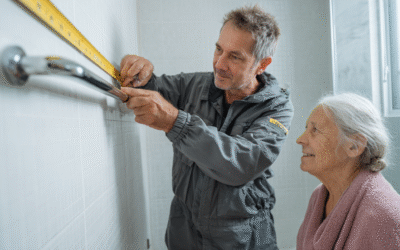
- Offer rate rebates or permit discounts for step-free entries, wider doors, and wet-room bathrooms.
- Develop a short “Stretcher-Friendly Home” checklist for builders and homeowners.
Simple design tweaks today prevent midnight chaos tomorrow.
5 | Shorten the night-time lag
After hours is when rural systems fail. Councils can fund the connective tissue that keeps it working:
- Co-fund an after-hours escalation protocol: a laminated contact sheet linking nurses, pharmacies, and on-call prescribers.
- Provide micro-grants for pharmacies willing to trial evening delivery runs.
- Supply solar path lights and reflective signage on priority ambulance routes.
- Pilot key-safe lockboxes for palliative clients so emergency crews and nurses can enter safely.
These fixes aren’t glamorous – but they shave off the minutes that matter most.
6 | Support the carers who carry the load
End-of-life care often relies on two exhausted family members or aged-care workers. Council can help by funding training and respite vouchers, integrating palliative needs into volunteer transport schemes, and offering temporary parking or rate relief for live-in carers. Small supports keep people at home longer and reduce emergency transfers.
7 | Champion death literacy and grief support
Normalising death helps communities accept and prepare for it. Councils can host “Dying to Know” events, back a Compassionate Communities Charter, and create small reflection spaces in parks or near cemeteries. A little civic visibility goes a long way toward removing fear.
8 | Measure, publish, and advocate
Add end-of-life metrics to annual wellbeing reports:
- % of deaths in preferred place (home, aged care, hospital)
- Median wait for in-home palliative visits or equipment
- Number of after-hours transfers for pain crises
Publish a yearly Palliative Access Report Card. Data becomes leverage – a way for councils to argue for state and federal funding on evidence, not sentiment.
If councils adopt even half of these measures, they’ll shift palliative care from reactive to responsive – proving that in rural health, logistics is compassion made visible.
Cost, Risk, and Realism
None of these ideas appear in a standard shire budget line – yet none sit outside a shire’s remit. Local government already manages aged-care partnerships, community transport, disability access, and health promotion. End-of-life equity simply threads through all of them.
Most of the proposed actions fall between jurisdictions: part health, part infrastructure, part community wellbeing. That overlap is not a weakness – it’s an opportunity. Because palliative initiatives cut across state and federal portfolios – health, ageing, multicultural affairs, equality, housing, carers, and community services – councils can tap into grants, pilot programs, and inclusion funding that already exist. Money allocated for multicultural outreach, LGBTQIA+ inclusion, carer support, or food-security projects can often be structured to assist palliative households too. A culturally safe meal-delivery program, for example, might be funded under diversity grants yet serve every family struggling with end-of-life care. Inclusive funding isn’t a cost-shift – it’s a multiplier.
Language and culture
For residents from non-English-speaking backgrounds, especially those with dementia, language loss accelerates as cognition fades. A person who once navigated life confidently in English may revert to their first language and become isolated inside their own home. Without interpreters or bilingual staff, comfort becomes guesswork. Councils can partner with ethnic community organisations and multilingual volunteers to ensure palliative information, advance-care forms, and grief resources are available in the languages people remember best.
Cultural and gender diversity
LGBTQIA+ residents and carers often face a quieter isolation. Fear of judgement or misgendering keeps many from accessing support, while their partners – who may not be legally recognised as next of kin – can be excluded at the bedside. Local government can change that simply by embedding inclusive language and training into wellbeing plans and funding safe-space carer groups. What’s funded for one community ends up strengthening empathy for all.
Carers and the cost spiral
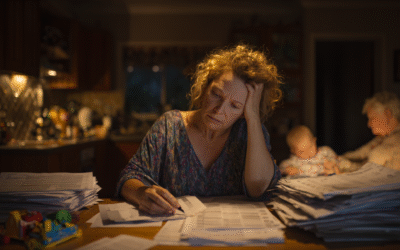
Every palliative case comes with at least one exhausted carer. When someone is dying at home, costs balloon – fuel, medical supplies, groceries, unpaid leave. Most carers don’t ask for help because they can’t spare the time to chase it. Rather than “carer outings,” what helps most are micro-supports within daily life: coordinated grocery delivery, subsidised transport, rapid-response cleaning or meal services, and a single local contact who can quietly arrange assistance. These fit comfortably inside existing community-care, emergency-relief, or food-security programs – they just need to be linked to palliative pathways.
Managing the practical risk
Yes, councils must navigate insurance, governance, and role boundaries. But those are familiar terrains – the same frameworks used for home-care or disability services apply here. Risks are mitigated through clear MOUs, maintenance contracts, and shared liability with partner health services. The greater risk lies in inaction: leaving frail residents unsupported because their needs fall between funding categories.
Inclusive planning doesn’t just reach more people – it unlocks more funding, more partnerships, and more compassion per dollar. For councils, that’s the definition of smart governance.
A Pathway Forward
Change in local government rarely happens through blueprints; it happens through conversations that shift what’s considered “our business.” Palliative care isn’t new territory – it’s simply unclaimed ground between departments.
The first step isn’t a pilot or a budget line; it’s curiosity. Start with a workshop that brings together the people already doing the work – community nurses, aged-care managers, multicultural officers, planners, carers, and the local funeral directors who see where systems fray. Map the bottlenecks, the distances, the silences. From there, opportunities will surface: an unused depot that could store equipment, a grant that could fund navigators, or a signage program that doubles as ambulance access.
Over time, councils can build this into existing strategies rather than bolt it on. Integrate “time equity” measures into health and wellbeing plans, fold palliative needs into multicultural and LGBTQIA+ inclusion programs, and embed carer support within food-security networks. Each small change strengthens the system for everyone.
Local government doesn’t need to own palliative care to lead it. It only needs to recognise that dying well is as much a civic responsibility as living well – that the same principles we apply to roads and waste collection can apply to dignity, comfort, and the final stretch of life.
Time as the Measure of Equity
Every council measures something: kilometres of sealed road, bins collected, permits approved. But few measure what truly defines dignity in regional health – the minutes between pain and relief.
In the city, those minutes are barely noticed; in rural Victoria, they’re everything. They decide whether an elderly man spends his final hours in comfort or agony, whether a nurse drives home before dawn or long after it. When access to relief depends on distance, time itself becomes a form of inequality.
Local government is uniquely placed to change that because it already governs time in every other way – the time it takes an ambulance to reach a property, a carer to find parking, a bed to be delivered, a road to be repaired. Once councils start treating those minutes as civic infrastructure, compassion stops being an aspiration and becomes a measurable service outcome.
This isn’t about hospitals or clinical reform. It’s about the tempo of a community: how quickly it responds when someone needs light at the gate, a ramp at the door, a number they can actually call. Time equity is the quiet frontier of public health – invisible until it fails, transformative when it’s managed well.
If Wellington Shire, and others like it, began to see time as both a resource and a right, they could change the rhythm of dying across regional Australia. And in doing so, they’d remind everyone – from policymakers to neighbours – that equity isn’t just about who gets care, but how soon it arrives.
The Opportunity Before Wellington – and Every Rural Shire
Wellington already has the essentials that most regions can only wish for – three hospitals, dedicated community nurses, committed aged-care teams, and towns small enough to still know who’s hurting. The foundations are there; what’s missing is the connective tissue that turns compassion into coordination.
No one expects a council to run a hospice. But a council can decide whether the last hours of its residents are shaped by chaos or calm. It can make sure the roads are visible, the equipment is near, the information is clear, and the carers aren’t left carrying the load alone. Those choices don’t need new legislation – just a broader definition of local responsibility.
For Wellington, the invitation is simple: to lead by example. To show that a rural shire can expand its idea of “liveability” to include the final chapter of life. That every planning scheme, every grant, every wellbeing plan can quietly ask the same question – will this make dying here easier, kinder, or quicker to comfort?
Because ageing in place means little if dying in place isn’t possible. And dying in transit – alone, delayed, or in pain – is not a standard any community should accept as inevitable.
If Wellington starts to see time, distance, and dignity as part of its infrastructure, it won’t just improve palliative care. It will redefine what it means to care for a community – from its first breath to its last.